
Bye Bye GPS: India to Soon Launch Its Own Position Determination System
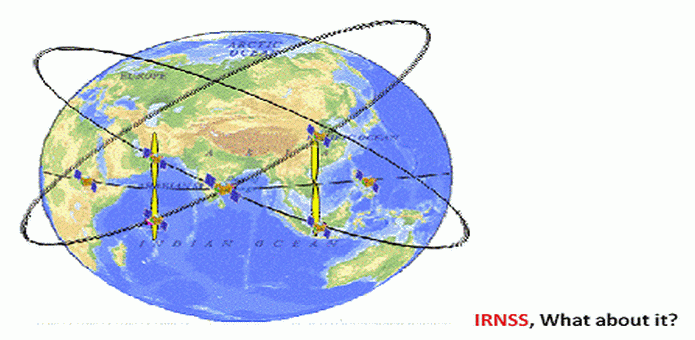
The Indian Space Research Organisation (ISRO) is building an indigenous position determination system to reduce dependency on the U.S. Global Positioning System (GPS). This new system, based on the Indian Regional Navigation Satellite System (IRNSS), will provide enhanced coverage and accuracy, especially in rural and remote areas across India.
What is IRNSS?
IRNSS is a regional satellite navigation system developed by ISRO to deliver precise position information. Unlike GPS, which is controlled by the U.S. government, IRNSS will remain under India’s complete control, ensuring reliable services at all times.
Coverage and Accuracy
The system is designed to cover India and a radius of about 1,500 km around it. IRNSS aims to provide location accuracy within 20 meters, using signals transmitted through L and S bands. Advanced embedded software will minimize atmospheric errors, resulting in higher accuracy compared to GPS.
Key Milestone: ISRO has already launched four satellites (IRNSS-1A, 1B, 1C, and 1D). The remaining three satellites (1E, 1F, 1G) are scheduled to be launched sequentially, making the constellation fully operational by mid-next year.
Applications of IRNSS
IRNSS will play a crucial role in multiple sectors:
- Disaster Management – Faster rescue and relief coordination.
- Fleet and Vehicle Tracking – Effective monitoring of trucks, ships, and logistics operations.
- Mobile Integration – Support for navigation-enabled smartphones and apps.
- Terrestrial Navigation – Voice and visual guidance for drivers and travelers.
- Military Applications – Encrypted signals for defense and strategic operations.
Two Types of Services
- Standard Positioning Service (SPS) – Available to all civilian users.
- Restricted Service (RS) – Encrypted, secure service exclusively for authorized agencies like the military.
Benefits Over GPS
Unlike GPS, which may have weak signals in certain remote regions, IRNSS is optimized for India’s terrain and provides reliable connectivity even in rural and isolated areas. It will also enable efficient route planning for shipping and logistics, saving both time and fuel.
Future Plans
ISRO Chairman Kiran Kumar has highlighted that while IRNSS currently serves regional needs, efforts are underway to make it a global navigation system. This would eventually extend its benefits to international users, making India one of the few nations with independent navigation capability.
With IRNSS, India is set to join the elite club of countries with indigenous navigation systems, ensuring sovereignty, accuracy, and wider access to critical positioning services.
